Image

Pesca Blue is a grassroots organization in Pacific Mexico that co-designs regenerative blue economic opportunities with small-scale fishing communities in exchange for their voluntary efforts in marine conservation. Specifically, our scientific team collaborates select fishing families to reduce bycatch of sea turtles, sharks, rays, and crocodiles by monitoring bycatch and identifying hotspots where fishing activities can be avoided or modified and incorporating technology such as LED lights for gillnets, pingers for longlines, and other bycatch reduction devices for traps and trawls. Pesca.Blue is developing a digital storytelling marketplace to connect eco-conscious consumers with the fishing families to directly purchase seafood at a premium price and purchase other products created from fish waste (i.e. pet treats, pet supplements, biofertilizers) or services in pescatourism and research support.

4038 Rive Lane
Addison, Texas 75001
United States
National Institute of Fisheries Science, Busan, Korea


SafetyNet Technologies develops light emitting devices to help fishermen catch the right fish, lowering bycatch by up to 90% and improving fishing revenues by 25%. This saves more fish, helps fishermen, and protects an increasingly essential food source now and for the future. We have projects around the world with national governments, scientists, retailers and the fishing industry.

Southeast Asian Fisheries Development Center
School for Marine Science and Technology is a graduate school at the University of Massachusetts engaging in research and education in all areas of marine science and technology. The Fish Behavior and Conservation Engineering (FBACE) Laboratory under the leadership of Professor Pingguo He focuses on the understanding of fish behavior, in the laboratory and in the field, and the application of the knowledge in designing fishing gears and operational strategies to reduce bycatch and discards, seabed disturbance, and other environmental impacts of fishing operations.
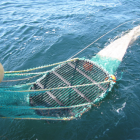
SMELTS is dedicated to developing technologies that reduce harmful interactions between humans and marine mammals. We have created a patent pending Ropeless fishing system that uses compressed air with variable buoyancy lift bags to bring gear to the surface which completely eliminates the vertical line and bouy. The system is complemented by an acoustic modem used to track gear location and trigger the lift bag inflation. This is a negatively buoyant fishing retrieval system that has the ability to lift heavy loads from the seafloor to the surface with ease. The system is easily scalable to meet the diverse requirements of many different fisheries. In addition, when at the surface it transmits active location information via satellite to the fishing vessel. This technology has the potential of eliminating entanglement risks to marine mammals, reducing gear conflicts, and minimizing ghost fishing and marine debris.
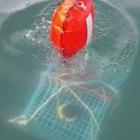

Sustainable Fisheries Partnership (SFP) is working toward a world where all fisheries and aquaculture are improving, and everyone has access to responsibly sourced and produced seafood. We work across the entire seafood value chain, from the world’s largest retailers to artisanal fishers, to find practical solutions to difficult problems. In everything we do, we focus on impact, to help ensure abundant fisheries, healthy marine and coastal ecosystems, and resilient fishing communities. Through our strong relationships with the seafood industry and the catch sector, we leverage the power of retailers, seafood buyers, and their supply chains to drive change in fisheries and aquaculture regions around the world. We bring industry together with NGOs, governments, fishers, and scientists, and then share our tools and expertise to help them find creative, collaborative solutions that work for everyone.
Building on this collaborative, solutions-oriented approach, SFP established the Bycatch Solutions Hub in 2023. The Hub brings together the seafood industry, conservation organizations, gear manufacturers, government agencies, researchers, and funders in a collaborative effort to address one of the seafood sector’s most pressing sustainability challenges, the unintended bycatch of endangered, threatened, and protected (ETP) marine species in wild-capture fisheries.
By creating a centralized and accessible online platform, the Hub helps industry stakeholders more easily identify, understand, and implement proven bycatch mitigation solutions in real-world fisheries operations. Additionally, the Hub helps identify funding needs and opportunities, build partnerships around priority projects, and direct financial resources toward practical, scalable solutions. By connecting seafood companies and other funders, conservation organizations, and innovators the Hub provides opportunities to advance the development, implementation, and scaling of effective bycatch solutions.
Visit us at www.sustainablefish.org, https://bycatchsolutions.org/homepage-2/ and follow us onLinkedIn, Instagram, and Facebook.